




 21% THCa







Every cannabis grower wants healthy plants and resinous flowers, but achieving both often comes down to the small decisions made throughout the growing cycle. Cannabis defoliation is a popular pruning technique that can make a meaningful difference in the quality of your final harvest.
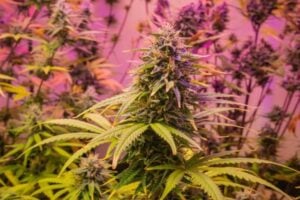
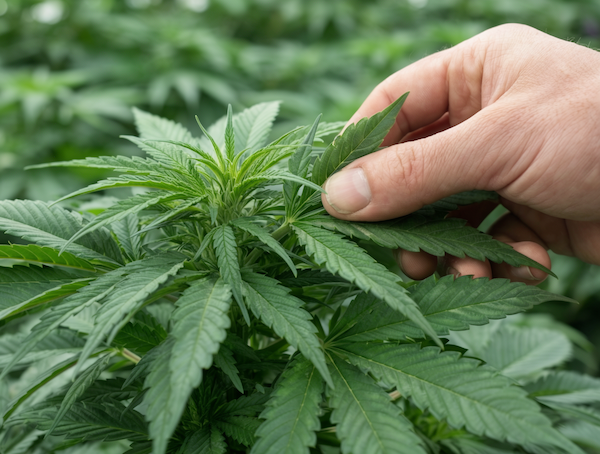
Also known as deleafing, growers typically use this technique when a plant’s canopy is dense enough that the larger fan leaves block light and fresh air from reaching the lower bud sites. Selectively removing a small number of leaves can increase light penetration and airflow within the entire canopy, and as a result, promote more robust, resinous buds.
While most of the info available today comes straight from growers themselves, some research does support the idea that selective defoliation can improve cannabinoid concentrations in certain strains. (Phillips et al., 2025) Articles about other crops also provide information that mirrors the positive results many cannabis growers have shared. For instance, in a study on grapevines, leaf removal increased air movement within the canopy and led to higher wind speeds. (English et al., 1989)
This guide focuses on why cannabis defoliation is a trusted technique for many cultivators, and outlines why beginner and intermediate growers may find it especially helpful. We’ll cover the defoliation process step by step, discuss how much foliage should be removed, which leaves to target, and compare defoliation to other techniques such as cannabis topping and lollipopping.
What Defoliation Actually Does to a Cannabis Plant
At its core, defoliation is the process of thinning out foliage. This alters the flow of nutrients and energy from the area of the plant that produces them to the area that stores or uses them. In plant science, this relationship is called a source-sink model. When it comes to cannabis plants, fan leaves are the “source,” and buds are the “sink.”
Carefully removing specific fan leaves allows air to move freely throughout the canopy and helps prevent stagnant pockets of humidity from forming around bud sites.
While cannabis defoliation can have clear benefits, it’s also a “less is more” approach. Large fan leaves can block the lower branches and bud sites from receiving adequate airflow and light, but because they’re a cannabis plant’s “sources,” they’re vital to survival. Removing too many can reduce your plants’ ability to photosynthesize and diminish their nutrient reserves.
Light Penetration and Airflow
One benefit of defoliation is improved light distribution. Research shows that manipulating a plant’s architecture through defoliation and other canopy-management practices can affect light distribution, plant structure, and cannabinoid levels, although responses can vary by cultivar and plant size (Danziger & Bernstein, 2021; Phillips et al., 2025).
Plant Stress
Because defoliation removes living tissue, it can also stress plants. Excessive leaf removal reduces photosynthetic capacity and forces the plant to invest resources in recovery. Fan leaves also store mobile nutrients, including nitrogen, so removing large amounts of foliage from a nutrient-deficient plant can worsen deficiencies. Successful defoliation is therefore about balance: removing foliage that limits the canopy while preserving enough healthy leaf area to support growth and flowering.
Helpful Cannabis Defoliation Terms
Beginner cannabis growers don’t necessarily need to know the following terms, but familiarizing yourself with the following concepts can help cultivators gain a better understanding of how the defoliation process works, and potentially, master it sooner.
Photosynthetic Photon Flux Density PPFD
Photosynthetic Photon Flux Density (PPFD) measures the density of photosynthetically active photons reaching a given surface each second. Put simply, it measures how much usable light reaches a plant’s leaves. In a study published in Physiology and Molecular Biology of Plants, researchers found that photosynthetic rates in cannabis sativa increased in response to greater light intensity and temperatures. The highest photosynthetic rate occurred at 30°C with a PPFD of 1,500 μmol/m²/s; beyond that light level, photosynthesis declined. In other words, higher PPFD means more light is available for photosynthesis; lower PPFD means less light is available. In practice, this means that well-lit fan leaves tend to produce more energy for building new tissue and fueling growth.
Light Compensation Point
A cannabis plant’s leaves are constantly balancing two opposing processes: photosynthesis, which uses light energy to produce sugars, and respiration, which breaks down some of those sugars to provide the energy needed for growth and basic cellular functions (Khan Academy, n.d.) The point at which the sugars produced through photosynthesis are equal to the sugars consumed through respiration is called the “light compensation point.”
When to Defoliate Cannabis: Timing by Growth Stage
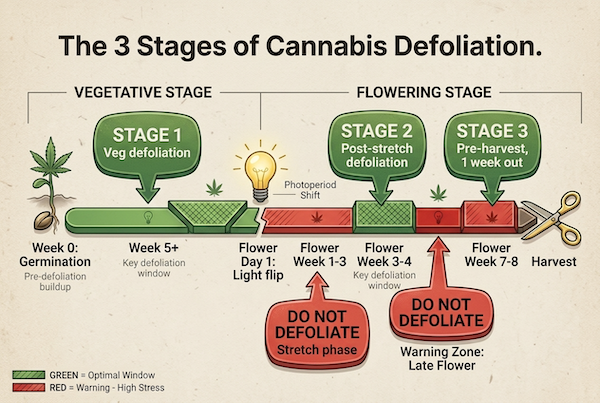
Pruning cannabis when your plants have limited leaf mass or are already under stress can reduce their ability to photosynthesize and recover. Because cannabis-specific defoliation timing research is limited, we’ve put together common recommendations from cannabis growers.
Seedling stage: avoid defoliation
Seedlings are still just beginning to develop and build their photosynthetic capacity. Removing healthy leaves at this stage isn’t recommended, as it reduces the plant’s available leaf area before it’s had the chance to develop a full canopy.
Early to mid vegetative growth: a cautious approach
During the vegetative stage, it’s best to take a conservative approach to defoliation. Many growers wait until plants have established several nodes before removing leaves and focus only on damaged or heavily shaded growth. Essentially, the goal is to improve the canopy’s structure without removing more photosynthetic tissue than needed.
When to defoliate in veg
Many growers perform their largest defoliation during the last few days of the vegetative stage, shortly before switching to a 12/12 light cycle. While the length of the vegetative stage will vary quite a bit depending on the strain you’re cultivating, most plants complete this phase in approximately 3-8 weeks. Autoflowers tend to have shorter vegetative stages of roughly 2-4 weeks.
When to defoliate in flower
Some growers choose to lightly defoliate their plants after they’ve gone through the stretching stage. Typically, this occurs around 3-4 weeks into the flowering stage, although every strain will vary in its timing. Lighter defoliation after the initial flowering stretch, often around 3-4 weeks into the flowering stage.
Late flower: avoid defoliation
It’s best to avoid defoliation during the late flowering stage because at this point, there’s not much time for the plants to recover before harvest. As a general rule, it’s best to remove only dead, damaged leaves or foliage that severely obstructs productive areas of the plant.
When to postpone defoliation
Avoid defoliating cannabis plants that are already under significant stress from situations like nutrient deficiencies, pests, excessive heat, or recent transplanting. When cannabis plants are already stressed, they have a limited ability to recover from tissue removal.
When to Remove Fan Leaves During Flowering
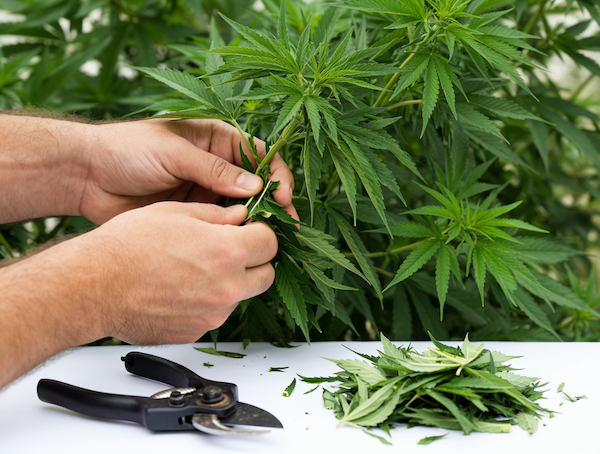
During the flowering stage, many growers remove fan leaves at two key points: around day 21, and again around day 40–45. A common cultivation practice, this approach removes leaves that are blocking bud sites or limiting airflow.
If you’d like to try defoliation yourself, it can be helpful to know more about the various types of cannabis leaves, which are the best to remove, and which should stay put.
Fan Leaves
Fan leaves are a cannabis plant’s largest and most recognizable leaves. Their broad leaflets spread outward the distinctive star-like shape commonly seen in logos, artwork, and popular imagery.
Some fan leaves can be removed during defoliation, especially if they sit directly over developing buds or heavily shaded leaves in the lower portion of the plant. It’s also helpful to target leaves that are yellowing or damaged. Healthy leaves at the top of the canopy should usually stay, as they typically receive the greatest amounts of light and help support photosynthesis.
Yellowed Fan Leaves
Yellowing fan leaves late in flowering are not always a sign of a problem. As plants mature, older leaves may enter senescence, a natural process where leaves gradually lose their photosynthetic efficiency (Havé et al., 2017). Stored nutrients, such as nitrogen, are broken down to support newer growth and developing tissues. The takeaway here is that growers do not need to remove every yellowing fan leaf. If a leaf is naturally fading late in the flowering stage, but remains attached and does not block light or airflow, it can often be left in place. However, fully yellow, damaged, or dying leaves that are no longer contributing to the plant can be removed.
Sugar Leaves
Sugar leaves are the small leaves that grow from and around cannabis flowers. Like other leaves, they contain chlorophyll, the green pigment that allows plants to capture energy from light and powers photosynthesis.
While they aren’t the plant’s main source of energy production, sugar leaves still play a supporting role by using chlorophyll to capture light and produce sugars that the plant uses for growth and development. They also often contain a high density of trichomes, the tiny resin-producing structures that create and store cannabinoids and aromatic compounds like terpenes.
Defoliation vs. Topping, Lollipopping, and LST
| Technique | What It Removes | When It’s Done | Primary Goal | Risk Level |
| Topping | Removes the growing tip of the plant | Vegetative stage only | Creates two main colas and encourages a wider, shorter plant structure | Moderate |
| Lollipopping | Removes lower branches and growth, not just leaves | Just before or at the start of flowering | Redirects energy toward upper colas and improves airflow below the canopy | Moderate to high |
| LST (Low-Stress Training) | Removes no plant tissue; branches are bent and tied into position | Vegetative growth and early flower | Opens the canopy and improves light distribution | Low |
| Leaf Tucking | Removes no plant tissue; fan leaves are moved beneath branches | Throughout vegetative growth and early flower as needed | Improves light exposure without stressing the plant | Very low |
Defoliation vs Topping Cannabis
Topping and defoliation are often used together, but they serve very different purposes. Topping removes the plant’s growing tip during the vegetative stage, redirecting growth hormones to encourage two main stems instead of one. This creates a wider, bushier plant with more potential flowering sites and is considered a high-stress training technique because it removes actively growing tissue.
Defoliation, by contrast, removes selected fan leaves rather than growing tips. Its goal is to improve light penetration and airflow within the canopy by removing leaves that shade developing bud sites or restrict air movement. Unlike topping, defoliation does not change the plant’s branching pattern.
Topping cannabis typically occurs in the vegetative stage. This approach provides the plant with some recovery time before flowering. Defoliation typically creates less plant stress, so it can also begin in the vegetative stage and, when needed, continue more selectively into early flowering.
Lollipopping Cannabis
Lollipopping is a targeted pruning technique that pairs well with defoliation. This approach removes the lower growth from the bottom third of a plant. A bare stem is left behind, while the upper canopy remains dense and bushy—similar to the shape of a lollipop.
While defoliation only removes leaves, lollipopping removes branches and bud sites. Growers use this technique when they want to channel energy towards the top colas, eliminate airy popcorn buds, and boost air circulation to prevent mold.
Low-Risk Methods: Leaf Tucking and LST
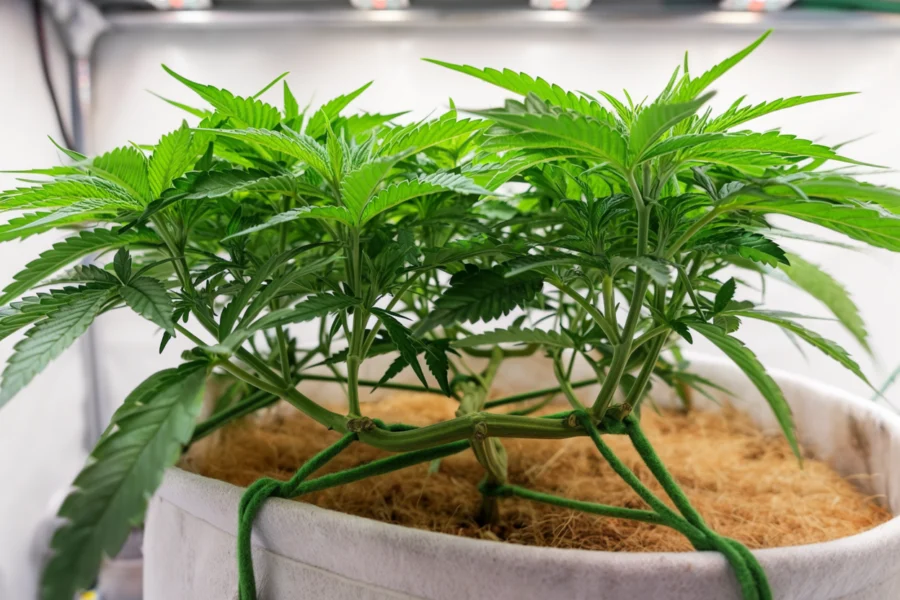
Low-stress training (LST) and leaf tucking are both low-stakes approaches and ideal for first-time growers. Many beginners find it’s actually best to master these techniques first, before attempting defoliation.
LST involves bending and tying down a plant’s branches to open the canopy. Unlike defoliation, it does not require tissue removal, and therefore, is especially low risk. This approach is typically a good choice for newer growers, or anyone cultivating autoflowering strains.
Leaf tucking means exactly what it sounds like. By simply repositioning the fan leaves beneath the branches, growers can avoid making any permanent changes. It’s also a zero-cost alternative that most beginners skip.
High-Risk Methods: Heavy Defoliation and Schwazzing
In general, growers using selective defoliation try to avoid removing more than 20-25% of a plant’s leaves. While there’s no standardized cutoff, removing plant material in excess of this range is generally considered “heavy defoliation.”
Schwazzing is an even more aggressive approach. This extreme defoliation technique was popularized in the book Three A Light by Joshua Haupt and involves removing 100% of a plant’s fan leaves.
Three A Light’s schwazzing guide recommends schwazzing at days 1 and 20 of the flowering stage to dramatically boost yields. However, heavy defoliation during flowering and schwazzing are not beginner techniques. Growers who are curious to see how it works firsthand can try testing it on just one of their plants. Keep in mind that schwazzing requires healthy, vigorous, well-fed plants, strong lighting, tight environmental control, and genetics that can tolerate significant stress.
The biggest mistake growers make is applying aggressive defoliation to plants that cannot support the recovery process. Removing a large amount of leaf tissue from a weak, stressed, or underdeveloped plant can slow growth and reduce harvest potential rather than increase it.
For most home growers, a more conservative approach is a safer starting point. If you decide to remove any leaves during the flowering stage, it’s typically a good idea to remove no more than 20% of the total leaves and allow 7–10 days of recovery between passes and monitor how the plant responds before removing more.
Defoliating Autoflowers: Why Less Is More
Autoflowers typically complete their lifecycle in roughly 70–100 days from seed to harvest, although the exact timing varies by genetics and growing conditions (Curtis, 2026). If a photoperiod plant is stressed and loses two weeks of growth, a grower can simply extend the vegetative stage by two weeks before switching to flower. Because autos stick to a strict, internal clock, they have a limited amount of time to recover.
For this reason, knowing when to defoliate autoflowers is key. Any deleafing should be carried out during the vegetative stage, right before the pre-flowering phase. It’s also a good rule of thumb to only remove clearly dead, damaged, or fully shaded leaves that are no longer contributing to the plant.
For most autoflowers, low-stress training (LST) and leaf tucking are better options for improving light penetration without removing plant tissue. These techniques open the canopy and expose more bud sites while allowing the plant to keep the leaves it needs for photosynthesis.
How to Defoliate Cannabis: A Step-by-Step Guide
- Prepare your tools: Use very sharp straight or curved trimming scissors, wash your hands, and make sure you have a bin to collect the leaves you remove. It’s also a good idea to sterilize the scissors with isopropyl alcohol between each plant; this can help reduce the risk of spreading pathogens.
- Assess before cutting: Look at the plant from the side and below the canopy. Identify shaded bud sites and mentally mark the leaves that block these sites before making any actual cuts.
- Remove selectively: Begin with shaded leaves in the bottom third, then interior leaves growing inward through the canopy, followed by large leaves blocking upper bud sites. Cut the petiole close to the stem, not through the middle of the leaf.
- Maintain a conservative approach: Remove no more than 20–30% of leaf mass per session. It can also be helpful to snap a photo of your plant before and after to help guide your future decisions.
After defoliation, keep temperature and humidity stable. Do not increase nutrients the same day. A healthy plant should perk up within 24–48 hours; if it looks worse after three days, the pass was likely too heavy.
It’s also best to avoid defoliating cannabis during a heatwave, transplanting the same day, tearing leaves off by hand, or removing the sugar leaves.
Which Cannabis Plants Respond Well to Defoliation?
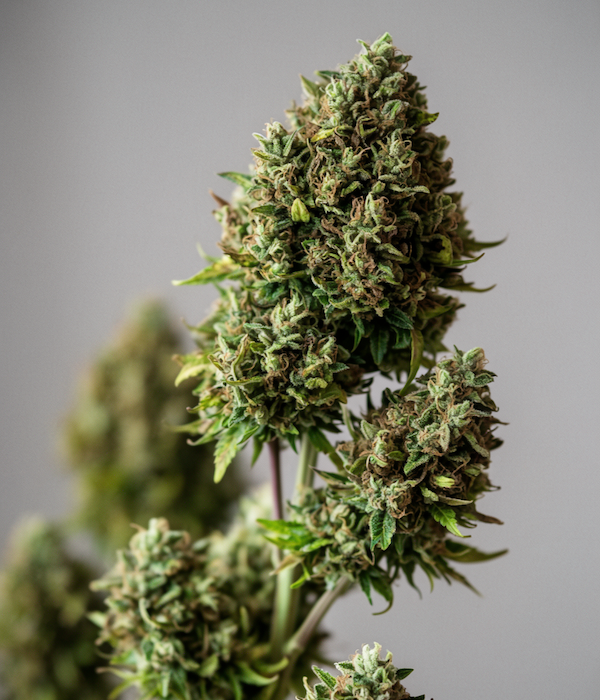
Photoperiod strains that are especially vigorous and resilient tend to be better candidates for more aggressive defoliation. Many indica-dominant varieties naturally fit this profile because their dense, bushy growth can benefit from improved airflow and light penetration.
However, individual genetics matter more than the indica/sativa label alone. Sativa-dominant choices can also respond well to selective defoliation, especially because they tend to have slightly longer vegetative periods, and in turn, more time to recover. However, sativas tend to be taller and have more space between their branches; for this reason, some growers tend to focus more on canopy management techniques like topping and low-stress training (LST).
Autoflowering and photoperiod strains can also both respond well to defoliation. That said, photoperiod plants remain in the vegetative stage until their lighting cycles change; this means growers can intentionally delay flowering to provide their plants more time to recover. Because autos grow according to a strict, internal clock, they don’t have the option of a longer recovery time. That doesn’t mean they can’t handle defoliation, just that it’s important to remove leaves conservatively and ensure they have enough time to bounce back before flowering.
Ultimately, there’s no one category of cannabis that responds best to defoliation. Whether it’s a feminized photoperiod, a feminized auto, a sativa, or an indica, any strain can benefit from selective leaf removal so long as it responds swiftly to stress.
The Right Approach to Cannabis Defoliation
While this guide covers the basics on cannabis defoliation, thoughtfully observing your plants and responding to their unique needs is just as important as knowing how to carry out the techniques discussed above. Successful defoliation, at its core, comes down to making careful decisions based on your plants’ health, structure, and growing environment. This fine-tuned approach is something beginner growers can try early on, knowing that with each grow, their intuition will only continue to improve.
Learning about other cannabis cultivation strategies can also help build a deeper understanding of how a cannabis plant will respond to various situations. Our cannabis knowledge base has guides and articles on topics such as when and how to harvest cannabis, training techniques like SOG and ScrOG, and first-time grower tips. Each skillset another piece to the puzzle, and as a grower learns how these pieces fit together, they will develop a strong intuition about how to solve problems, understand their plants, and cultivate any number of strains with finesse.
FAQs
When should cannabis be defoliated?
The best times to defoliate photoperiod cannabis are late in the vegetative stage before switching to flowering, then again around day 21 and day 40 to 45 of flower if needed. Avoid defoliating seedlings, and skip heavy leaf removal after about week 7 of flowering, when plants are focused on ripening rather than producing new growth.
Should autoflowers be defoliated?
In most cases, no. Because autoflowers move into flowering on a fixed timeline, they have less time to recover from stress. It’s usually better to remove only dead or heavily shaded leaves during early vegetative growth, then rely on low-stress training (LST) and leaf tucking to expose bud sites.
How many leaves should be removed at one time?
For healthy photoperiod plants, avoid removing more than about 20 to 30% of the plant’s total leaf mass in a single session. Stressed plants and autoflowers should lose even less. Rather than counting leaves, focus on removing only those that significantly block light or restrict airflow.
Does defoliation increase yields?
It can, but only indirectly. Defoliation doesn’t create more energy. Instead, it can improve light penetration and airflow, allowing the plant to use its existing resources more efficiently. Any yield increase depends on the plant having excess foliage to begin with, and controlled studies on cannabis are still limited.
What happens if too many leaves are removed?
Pruning cannabis too aggressively (over-defoliating) can slow growth, delay bud development, and leave plants drooping for more than 48 hours. Because fan leaves also store nutrients, removing too many can contribute to nutrient deficiencies.
Should yellow fan leaves be removed during flowering?
Dead or completely yellow leaves can be removed at any point. However, yellowing fan leaves late in flowering are a normal part of the plant’s life cycle. Removing them won’t speed up ripening, and the plant may still be reclaiming nutrients, especially nitrogen, from those leaves.
Can cannabis be defoliated during the flowering stretch?
It’s best to wait. During the first two to three weeks of flowering, cannabis plants are rapidly stretching and establishing bud sites. They benefit from having their full photosynthetic capacity during this period. Once the stretch has clearly ended, selective defoliation is much less likely to interrupt development.
References
Phillips, A. L., Gill, A., McGorm, B., & Burton, R. A. (2025). LED spectra and defoliation independently shape canopy architecture and cannabinoid yield in indoor Cannabis cultivation. Industrial Crops and Products, 236, 121918. https://doi.org/10.1016/j.indcrop.2025.121918
English, J. T., Thomas, C. S., Marois, J. J., & Gubler, W. D. (1989). Microclimates of grapevine canopies associated with leaf removal and control of Botrytis bunch rot. Phytopathology, 79(4), 395–401. https://www.apsnet.org/publications/phytopathology/backissues/Documents/1989Abstracts/Phyto79_395.htm
Danziger, N., & Bernstein, N. (2021). Shape matters: Plant architecture affects chemical uniformity in large-size medical cannabis plants. Plants, 10(9), 1834. https://doi.org/10.3390/plants10091834
Georgia Institute of Technology School of Biological Sciences. (n.d.). Sugar transport in plants: Phloem. Organismal Biology. https://organismalbio.biosci.gatech.edu/nutrition-transport-and-homeostasis/plant-transport-processes-ii/
Chandra, S., Lata, H., Khan, I. A., & ElSohly, M. A. (2008). Photosynthetic response of Cannabis sativa L. to variations in photosynthetic photon flux densities, temperature and CO₂ conditions. Physiology and Molecular Biology of Plants, 14(4), 299–306. https://doi.org/10.1007/s12298-008-0027-x
Khan Academy. (n.d.). Learn: An introduction to photosynthesis. Khan Academy. https://www.khanacademy.org/science/biology/photosynthesis-and-cellular-respiration/photosynthesis/a/photosynthesis-overview
Havé, M., Marmagne, A., Chardon, F., & Masclaux-Daubresse, C. (2017). Nitrogen remobilization during leaf senescence: Lessons from Arabidopsis to crops. Journal of Experimental Botany, 68(10), 2513–2529. https://doi.org/10.1093/jxb/erw365
Three A Light. (n.d.). Ultimate guide to Schwazzing. https://threealight.com/pages/ultimate-guide-to-schwazzing
Curtis, P. (2026, June 16). Best autoflower seeds: What they are and how to make the right pick. Almanac. https://www.almanac.com/autoflower-seeds