




 21% THCa







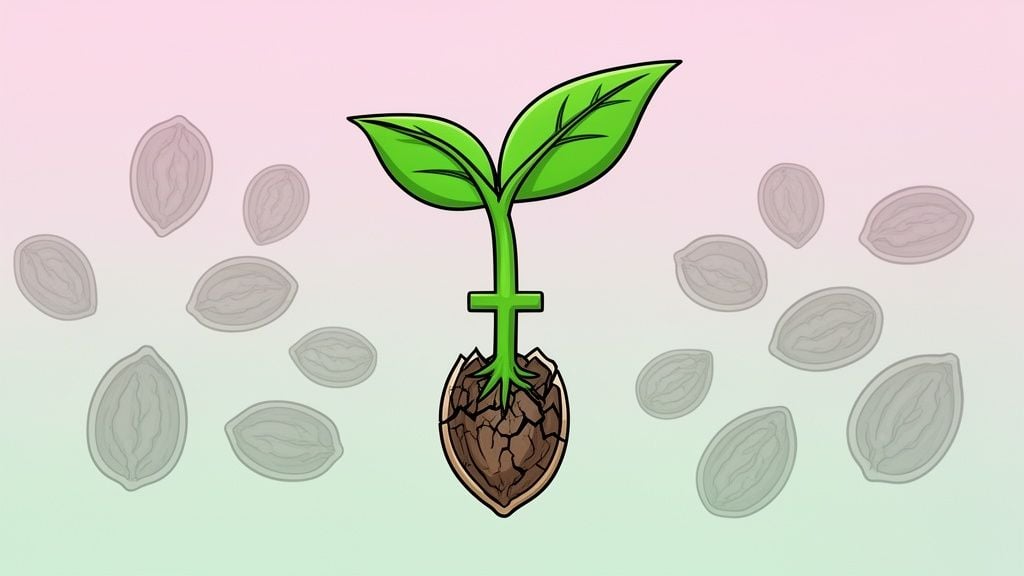
Let’s cut to the chase: a feminized cannabis seed is one that’s been bred to produce a female plant almost 100% of the time. For any grower, this is a game-changer. Why? Because only female plants produce the cannabinoid-rich buds we’re all after.
This simple fact completely removes the 50/50 gamble that comes with regular seeds, where you could end up with half your crop being useless males.
The Grower’s Edge: What Feminized Seeds Mean for Your Garden
So what does this mean for you, the grower, in real-world terms? Think of feminized seeds as a guarantee for your valuable garden space. When you pop a regular seed, you’re basically flipping a coin. You might spend weeks nurturing a plant—giving it your time, energy, and expensive nutrients—only to find out it’s a male.
Male plants don’t grow buds; they grow pollen sacs. If even one male plant pollinates your females, their bud production will tank as they switch their energy to making seeds. Feminized seeds take that entire risk right off the table.
This makes them a lifesaver for a few types of growers in particular:
- Beginner Growers who don’t want the headache of sexing plants and pulling out males.
- Indoor Cultivators working with limited space, where every square foot has to count toward a productive, bud-bearing plant.
- Efficiency-Focused Growers who need to maximize their yield without pouring resources into plants that won’t deliver.
Why They Dominate the Market
This level of reliability is exactly why feminized seeds have become the gold standard in the cannabis world. This innovation was a huge leap forward, giving growers a predictable path to a garden full of the beautiful buds they want. It’s no surprise that feminized seeds now command a whopping 48.9% revenue share of the global cannabis seeds market.
For the home grower, this means no more anxiously checking for pollen sacs or worrying about a stray male ruining your entire harvest. You just plant, grow, and focus on helping your female plants thrive. It’s all about making cultivation more predictable and way more rewarding.
It’s also worth noting that most feminized seeds are photoperiod strains. If that term is new to you, it’s a good idea to learn more about what photoperiod seeds are and how their light cycles trigger flowering. Understanding this is a cornerstone of getting great results.
For a quick breakdown, here’s how feminized seeds stack up against their traditional counterparts.
Feminized Seeds at a Glance
| Characteristic | Feminized Seeds | Regular Seeds |
|---|---|---|
| Gender Outcome | 99%+ Female | 50/50 Male/Female Chance |
| Primary Goal | Sinsemilla (seedless) Bud Production | Breeding, Phenotype Hunting |
| Grower Effort | Lower – no need to identify and remove males | Higher – requires sexing plants |
| Space Efficiency | High – every plant is productive | Lower – space is wasted on males |
| Best For | Beginners, commercial growers, hobbyists focused on yield | Experienced breeders, genetics enthusiasts |
How Feminized Seeds Are Actually Made
So, how do breeders manage to deliver a nearly 100% guarantee of female plants? It sounds a bit like science fiction, but the reality is just clever plant science—no complex genetic modification or lab wizardry required. It all boils down to a deep understanding of how cannabis works.
The journey starts with a rock-solid female plant. This isn’t just any plant; she’s chosen for her stellar genetics, maybe for her amazing flavor, impressive yields, or dense, frosty buds. Once this “mother” plant is selected, the breeder will intentionally, and very carefully, stress her out.
Now, this isn’t the kind of stress we usually try to avoid, like overwatering or nutrient lock. It’s a specific, controlled technique designed to fool the plant into believing its reproductive window is closing fast.
The Clever Trick Behind Feminization
The most trusted method today involves spraying a flowering female with a solution of either colloidal silver or silver thiosulfate. These solutions work as natural ethylene blockers. Think of ethylene as the hormone that tells the plant to produce female flowers. When you block it, you’re essentially nudging the plant to express male traits instead.
This is where the magic happens. The treated female plant starts developing pollen sacs, just like a male would. But here’s the crucial part: this pollen is different. Since it came from a plant with two X chromosomes (the female genetic code), the pollen it creates only carries female genetic information.
In essence, you get the reproductive function of a male plant but with the genetic blueprint of a female. This “female pollen” is the secret ingredient that makes feminized cannabis seeds possible, creating a reliable shortcut to a garden full of bud-producing plants.
Once this special pollen is mature, it’s meticulously collected. The breeder then uses it to pollinate another healthy, untreated female plant. This second plant goes on to produce seeds, but since both “parents” were genetically female, the seeds they create are virtually guaranteed to be female as well. It’s an ingenious breeding hack that ensures your time, space, and resources are all focused on productive plants.
This process completely changes the odds for a grower, turning the 50/50 gamble of regular seeds into a near certainty.
The real takeaway here is the shift from total uncertainty to predictable results. That’s precisely why feminized seeds have become such a game-changer for anyone looking to maximize their harvest.
The Real Benefits of Using Feminized Seeds
So, why bother with feminized seeds when regular ones exist? Let’s cut through the noise and talk about the practical, real-world advantages you’ll see in your grow space. It all boils down to one simple, powerful concept: efficiency.
Think about everything you invest in your garden. There’s the electricity bill for the lights, the cost of quality soil and nutrients, and, of course, your own time and effort. When you pop regular seeds, you’re essentially gambling, spending weeks nurturing plants without knowing if they’ll even be the females you need for a harvest.
If a plant reveals itself as a male, all that time, money, and energy you’ve poured into it is wasted the moment you have to pull it. Feminized seeds take that gamble completely off the table.
Maximizing Your Space and Resources
With feminized seeds, virtually every plant you cultivate will be a bud-producing female. This is a game-changer, especially for growers working with a small tent, facing legal plant-count limits, or simply wanting to get the most bang for their buck. No more dedicating precious square footage or nutrients to plants that won’t make it to harvest.
The industry has taken notice, too. The massive shift toward feminized seeds is a key driver in the global market because they guarantee over 99% female plants. This lets growers skip the tedious process of sexing their crop and avoids having to discard nearly half of their plants. For a commercial or home grower, that can mean saving 40-50% on space, soil, and nutrients that male plants would have consumed. If you’re curious about the bigger picture, you can discover more insights about the global cannabis seeds market here.
For a home grower, this translates directly to a bigger, better harvest. More of your resources go toward producing high-quality buds, not just keeping placeholder plants alive until you can identify and remove the males.
Peace of Mind for Every Grower
Beyond the practical savings, there’s a huge mental benefit here, particularly if you’re new to growing. Trying to identify the sex of your plants can be genuinely stressful. You’re squinting at nodes, anxiously trying to tell the difference between the first signs of female calyxes and male pollen sacs. If you guess wrong, you’ve got a big problem.
A single male plant that goes unnoticed can release its pollen and fertilize your entire crop. Once a female plant is pollinated, it diverts its energy from making potent, resinous buds to producing seeds instead. The end result is a disappointing harvest of seedy, low-quality flower.
Using feminized seeds gives you something invaluable: peace of mind.
- No Guesswork: You can skip the daily anxiety of checking for males.
- No Accidental Pollination: Your crop is protected from being turned into a seed-making operation.
- Predictable Results: You can plan your grow with confidence, knowing every plant is working toward your final yield.
Ultimately, choosing feminized seeds makes your entire cultivation journey smoother, less stressful, and far more rewarding. You get to focus on the fun parts of growing—like training techniques and watching those beautiful flowers develop—without the constant worry of a rogue male spoiling the party.
A Grower’s Guide to Feminized Seeds
So, you’ve got your hands on some feminized seeds and are ready to watch them transform into beautiful, bud-producing plants. Let’s walk through the entire process, from that first pop to the final harvest. This is the practical, hands-on advice you need to kickstart your growing journey with confidence.
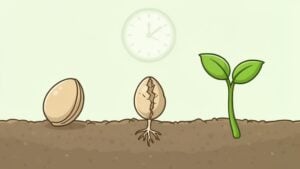
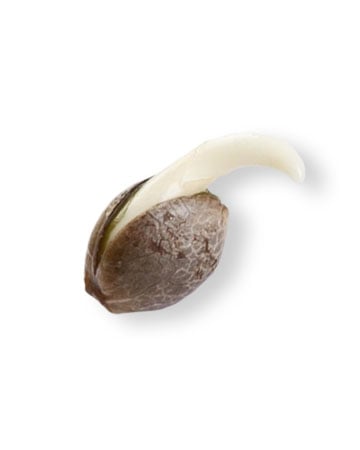
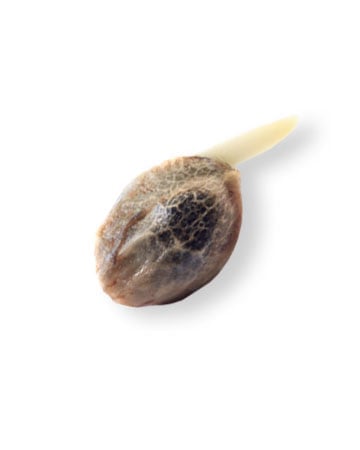
The very first step is germination, often called “popping” the seeds. This is the moment you gently wake them from their slumber and encourage that first tiny taproot to emerge. While there are a few ways to go about it, the paper towel method is a classic for a reason—it’s simple, reliable, and gets the job done. All you need are a couple of plates, some paper towels, and your seeds.
The goal here is simple: create a sterile, consistently moist, and dark home for them. Think of it as a cozy little incubator. A clean setup is non-negotiable, as it prevents mold or bad bacteria from taking out your seedlings before they even have a chance to start.
From Seedling to Vegetative Growth
Once that little white taproot pokes out, it’s time for a new home. Gently plant your sprouted seed, root-down, about a quarter-inch deep into your chosen medium, whether that’s soil, coco coir, or something else. Now the real fun begins. Your plant is officially in the vegetative stage, where its only job is to get as big and strong as possible.
During this phase, you’ll want to provide a consistent 18/6 light cycle. That’s 18 hours of light followed by 6 hours of darkness. This long “day” tells the plant it’s the peak of growing season, pushing it to develop a massive root system and lots of leafy branches. Those branches are what will eventually support all your heavy buds.
Think of the vegetative stage as the plant’s childhood and teenage years. Your job is to create a stable home with plenty of light and the right food so it can build a powerful frame for the productive flowering phase to come.
Getting this first step right is crucial. For a deep dive into making sure every seed pops, our comprehensive cannabis seed germination guide covers all the details you’ll ever need.
Flipping the Switch to Flowering
After a few weeks of vegetative growth, once your plant has reached a good size, it’s time to “flip” it into flowering. This is the magic moment where you, the grower, take control and tell your plant it’s time to start making the buds you’ve been waiting for.
So how do you send the signal? By changing the light cycle to a strict 12 hours of light and 12 hours of uninterrupted darkness. This change mimics the shortening days of late summer and tells a photoperiod cannabis plant that winter is coming. This triggers the hormonal shift that initiates flowering.
As your plant starts to form buds, its dietary needs will change, too. It will crave less nitrogen and a lot more phosphorus and potassium to fuel flower production. Keep a close eye on your plants during this time, watching for any signs of stress like yellowing leaves or drooping. Adjust your watering and feeding as needed—because happy, healthy plants are the ones that deliver amazing yields.
How to Choose the Right Feminized Strain
Not all feminized seeds are the same, and picking the right one is all about matching the plant’s genetics to your specific goals and grow space. It’s a bit like choosing a dog breed—you wouldn’t get a Great Dane for a studio apartment. The same logic applies to cannabis.
Before you get lost in cool strain names, take a moment to ask yourself a few basic questions. What kind of experience are you after? Are you looking for something to help you melt into the couch after a long day, or do you want an energetic, creative buzz for a weekend project? This is the most important decision, and it will instantly help you zero in on the right category.
Matching Strains to Your Grow Space
Next up, think about your physical setup. Are you working with a small indoor tent or a big, sunny patch in the backyard? Knowing your space limitations will guide you toward an indica, sativa, or hybrid strain, as they all grow very differently.
- Indica-Dominant Strains: These plants are famous for being short, bushy, and compact. They’re a fantastic choice for growers with limited ceiling height and tend to be a bit more forgiving for beginners.
- Sativa-Dominant Strains: Sativas love to stretch. They grow tall and lanky, so they need plenty of room to reach for the sky. These are best suited for outdoor grows or indoor spaces with high ceilings.
- Hybrid Strains: Just as the name implies, hybrids give you a blend of traits. You can find some that stay short and manageable like an indica but deliver the uplifting effects of a sativa, offering the best of both worlds.
Choosing a strain that fits your space prevents a world of headaches later. Trying to cram a towering sativa into a short tent will stress you and the plant, often leading to problems like light burn and disappointing yields.
The market for cannabis seeds is exploding, and feminized seeds are a major reason why. By guaranteeing female plants, growers can boost their usable flower yields by up to 2-3 times compared to starting with regular seeds. That’s because a single male can accidentally pollinate an entire crop, slashing its potency by 30-50%. You can read more about the growing seed market trends to understand just how valuable this efficiency is.
Finally, consider the flowering time and potential yield. Some strains are ready for harvest in as little as eight weeks, while others might need twelve weeks or more. If a quick turnaround is your priority, pay close attention to that detail. While you’re thinking about it, you might also want to explore the unique characteristics of autoflower seeds to see how they compare. A little bit of research now will set you up for a smooth, successful harvest down the road.
Common Questions About Feminized Cannabis Seeds
Even after getting the basics down, it’s totally normal to have a few questions rattling around. It’s a lot to take in, especially if you’re just starting out. Let’s clear the air and tackle some of the most common things growers ask so you can move forward with confidence.
Think of this as a quick chat to iron out the final details. We’ll get straight to the point and give you direct answers, helping you feel ready before a single seed hits the soil.
Can a Feminized Seed Still Turn Into a Male Plant?
This is probably the number one question on every grower’s mind. The short answer? It’s extremely rare, but technically, yes. High-quality feminized seeds from a reputable source boast a 99%+ success rate in producing female plants. That tiny chance of a plant showing male traits isn’t typically because the seed’s genetics were bad.
Instead, it’s almost always a reaction to severe environmental stress. Things like light leaking into the grow space during the dark cycle, wild temperature swings, or a major nutrient problem can shock a female plant. As a last-ditch survival mechanism, it might develop male pollen sacs to try and pollinate itself. This is what growers call a “hermaphrodite” or “herm”—it’s the plant’s emergency backup plan, not a sign of a faulty seed.
Are Feminized Seeds the Same as Autoflowers?
This is another huge point of confusion, but the answer is a definite no. These two terms describe completely different characteristics of the plant.
- Feminized is all about the plant’s sex. It simply means the seed has been bred to grow into a female plant that produces smokable flowers (buds).
- Autoflower is about its flowering trigger. An autoflower plant will start to flower automatically based on its age—usually after just a few weeks—regardless of the light schedule.
Most feminized seeds are what’s known as “photoperiod” strains. This means you, the grower, have to tell them when to start flowering by changing the light schedule to 12 hours of light and 12 hours of darkness. While nearly all autoflower seeds on the market are also feminized, the reverse isn’t true.
Think of it this way: “Feminized” tells you what the plant will be (a female), while “autoflower” or “photoperiod” tells you how it will behave. One is about gender, the other is about its internal clock.
Is It Harder to Grow Feminized Seeds?
Not at all—in fact, it’s quite the opposite. Feminized seeds are widely considered the easiest and most straightforward option for beginners. They completely remove one of the most stressful steps for a new cultivator: identifying male plants and getting rid of them before they pollinate your entire crop.
Getting that step wrong can ruin a whole harvest. By taking that major risk off the table, feminized seeds let you focus all your attention on learning the fundamentals of growing, like watering, feeding, and getting the lighting right. It makes for a much more forgiving entry into the world of cultivation.
Can I Get Seeds from a Feminized Plant?
Under normal growing conditions, the answer is no. Since your garden will be full of only female plants, there won’t be any male pollen around to fertilize them and create seeds. The whole point of growing with feminized seeds is to produce what’s known as “sinsemilla” (Spanish for “without seeds”). This is the good stuff—the high-potency, top-quality flower that growers are after.
The only way you’d find seeds on a feminized plant is if one of them “hermed” out due to stress and pollinated itself or its neighbors. But you wouldn’t want to use these seeds anyway. They often carry that same tendency to turn hermaphrodite, making them unstable and unreliable for future grows.
Ready to start your grow with genetics you can trust? At Growers Choice Seeds, we offer a massive selection of lab-tested feminized and autoflowering strains, all backed by our 90% germination guarantee. Find the perfect seeds for your setup and goals at https://www.growerschoiceseeds.us.