




 21% THCa



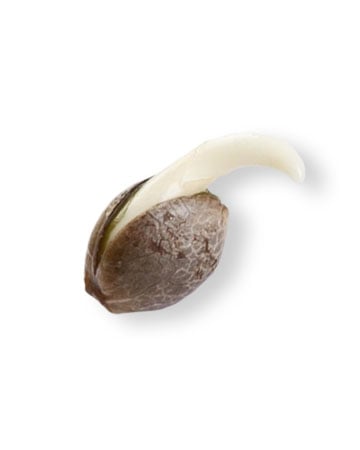


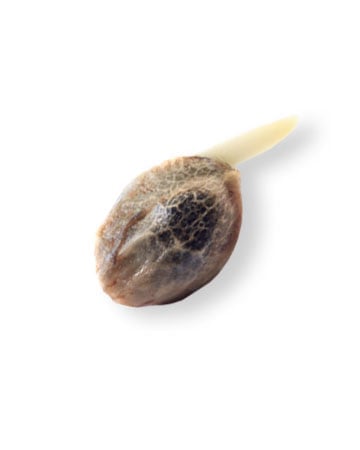


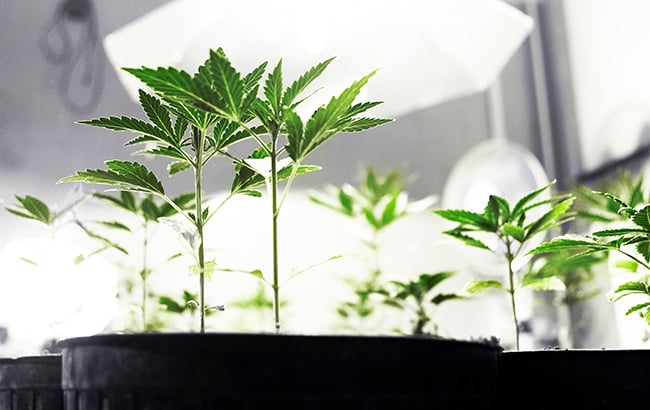
Let’s be real, cloning a clone is just a fancy way of saying you’re taking a cutting from a plant that was already grown from a clone. It’s the ultimate move for any grower who’s found that one killer “unicorn” plant and wants to keep it in the rotation forever. No more popping a pack of seeds and just hoping you get that same winner again.
Why Cloning a Clone Is Your Perpetual Harvest Secret
Think about that one plant you grew that was just perfect. Maybe it had the exact smell you were after, a structure that fit your tent like a glove, or a yield that was just ridiculous. Cloning that plant is a no-brainer.
But what happens when that awesome clone grows up into a beautiful mother plant? Simple. You just do it all over again.
This cycle is the real secret to a perpetual harvest. You’re completely sidestepping the genetic lottery you play with seeds and locking in an exact copy of your best plant, every single time. It’s all about taking the guesswork out of the equation.
The Power of Genetic Consistency
When you finally find that winning phenotype from a pack of seeds, you hold onto it for dear life. Cloning your clone lets you keep those top-tier genetics going, generation after generation.
This means you can expect:
- Identical Growth Patterns: Every plant will stretch the same and branch out the same. This kind of predictability makes managing your canopy and light distribution a hell of a lot easier.
- Predictable Potency and Flavor: You know exactly what you’re going to get. The terpene profile and cannabinoid content will be consistent, so there are no letdowns at harvest time.
- Consistent Yields: With identical plants, you can dial in your environment and feeding schedule, knowing each one will react the exact same way.
Taking cuttings from a cloned mother plant is like having a living library of your favorite genetics. It’s the most solid way to make sure every harvest lives up to your expectations.
Saving Time and Money
Now for the really good stuff. Constantly buying seeds gets expensive, especially when you’re hunting for that one special trait. Once you’ve found your keeper, cloning it saves you a ton of cash. Why pay for genetics you already have sitting in your grow room?
On top of that, clones give you a serious head start over seedlings. A clone is already biologically mature, which can easily shave weeks off your veg time. A quicker turnaround means more harvests per year, kicking your perpetual harvest goals into high gear. It’s a simple strategy that puts you in the driver’s seat.
Selecting and Prepping a Viable Mother Plant
Your whole cloning operation lives or dies by the quality of the plant you start with. Seriously. Picking the right mother isn’t just about grabbing the biggest plant in the tent; it’s about finding a proven winner that’s always shown strong, healthy growth. This plant is the genetic blueprint for every single clone you make from here on out.
Think of it as picking the MVP of your garden. You’re looking for that one plant that’s always had beefy branches, deep green leaves, and has shrugged off any stress you’ve thrown at it. Stay away from any plant that’s ever struggled with nutrient problems, pests, or just grew weak and lanky. Those are red flags for genetics you don’t want to copy.
The quality of your cuttings is a direct reflection of the mother’s health in the weeks leading up to the snip. A stressed-out mom will give you stressed-out, weak clones. It’s that simple.
Getting Her Ready for Cuttings
Once you’ve scouted your star player, it’s time to prep her for the big day. About a week or two before you plan on taking cuttings, you need to switch up her diet. Back off any heavy bloom boosters and put her on a nitrogen-rich vegetative nutrient formula.
This simple change tells the mother plant to put its energy into making lush, leafy growth—exactly what you want for strong, viable clones. You’re essentially signaling the plant: “Hold off on the flowers, let’s focus on making more healthy stems and leaves.”
This prep work isn’t optional if you want the best results. By making sure the mother is in peak veg condition, you’re basically pre-loading your future cuttings with everything they need to root fast and take off.
The Science and Art of Selection
Choosing a mother plant from a previous generation of clones is how experienced growers lock in consistency. The whole idea of cloning a clone isn’t just some grower myth; it’s a proven method for keeping a plant’s best traits around. A fascinating uniformity study from Phylos even put this to the test with 190 Bubba Kush clones taken from mother plants that were also clones. The results? The method produced incredibly uniform plants, confirming that cloning generation after generation is a reliable way to keep great genetics going.
Ultimately, picking the right mother is a mix of science and just being a good gardener. Keep notes. Track which plants bounce back fastest from training and which ones give you the best yields. For instance, seeing the difference between topped vs non-topped plants can teach you a lot about a plant’s resilience and growth habits. This kind of close observation makes choosing your next mother plant a no-brainer.
Taking and Rooting Cuttings Like a Pro
Alright, this is where the talking stops and your hands get dirty. Taking cuttings, especially from a mother plant that’s a clone itself, is all about technique. Get this part right, and you’re on your way to a canopy full of identical, kick-ass plants.
Selecting and Prepping Your Cuttings
First thing’s first: you’ve got to scout for the perfect branches. Think Goldilocks—not the old, woody stems at the bottom, and definitely not the flimsy new growth at the very top. I always look for healthy, strong shoots on the lower two-thirds of the plant. These stems have the right mix of stored energy and drive to pop roots quickly.
Once you’ve found your candidates, grab a sterile scalpel or a fresh razor blade. Don’t even think about using scissors; they crush the delicate vascular tissues and can screw up your chances from the get-go.
You want to make a clean, quick slice at a 45-degree angle right below a node—that little spot where a leaf or branch grows from. This angled cut gives you way more surface area, making it easier for the cutting to drink water and for rooting hormone to work its magic. It’s a small detail that makes a huge difference.
This visual guide nails the simple but crucial steps for getting your mother plant ready before you even think about making a cut.
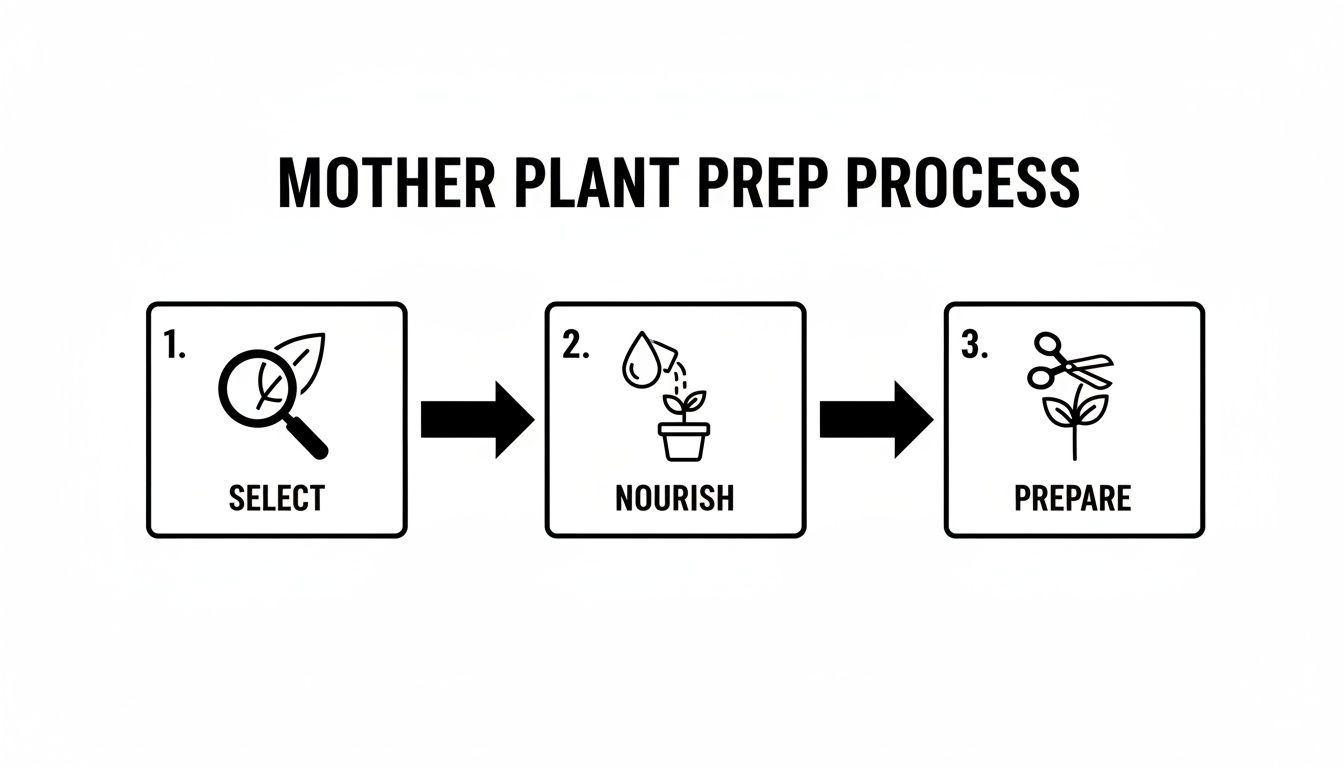
As you can see, a great clone starts long before the snip. It all begins with smart selection, proper feeding, and a clean prep routine.
Rooting Methods and Creating the Perfect Environment
With your cuttings snipped, the clock starts ticking. Get them into a glass of water immediately. This simple step keeps air bubbles from getting into the stems, which would block water and kill the cutting. From here, you’ve got a few solid ways to get them rooted:
- Rockwool Cubes or Plugs: These are my go-to for a reason. They hold a perfect air-to-water ratio. Just soak them in pH-balanced water (aim for 5.5-6.0), dip the cut end of your stem in your favorite rooting hormone, and gently slide it into the cube.
- Direct to Medium: You can also go straight into a light, airy medium. A mix of coco coir and perlite or a dedicated seed-starting mix works great. The key is to keep it consistently moist, but never soggy.
No matter which way you go, your new clones need two things desperately: crazy high humidity and gentle light.
The goal right now isn’t growth; it’s survival and making roots. Blasting them with intense light will only stress them out and force them to try and photosynthesize instead of focusing on what really matters—building a root system.
A humidity dome is non-negotiable. It traps moisture and creates a stable, warm environment (80-90% RH is the sweet spot) that stops the cuttings from wilting. For lighting, a small T5 fluorescent or a low-wattage LED is all you need. Keep the light cycle gentle; if you need a refresher, the principles in this guide on the right cannabis light schedule for seedlings apply perfectly here.
Give it about 7 to 14 days. Pretty soon, you should start seeing those first brilliant white roots poking out. That’s your signal that you nailed it, and your new plants are just about ready to be potted up.
Navigating Genetic Drift and When to Start Fresh

So, you’ve got that one perfect plant, and you’ve been cloning a clone to keep the magic alive. Smart move. But the question that eventually pops up is: can you really keep this going forever?
The short answer is no, not really. Sooner or later, every grower has to deal with a natural process called genetic drift.
Think of it like making a photocopy of a photocopy. The first copy looks almost exactly like the original. But if you keep copying the copy, over and over, the image starts to get blurry and lose its sharpness. The same thing happens with your plants on a cellular level.
Every time you take a cutting, you’re not just copying the good stuff. You’re also carrying over any tiny, invisible mutations or changes that have happened because of environmental stress or just random chance. Over many generations, these small changes start to add up.
Spotting the Signs of Decline
This slow degradation isn’t usually a sudden, dramatic failure. It’s more of a subtle decline that you might not even notice from one grow to the next. It’s a gradual loss of vigor that can sneak up on you if you’re not paying close attention.
Here are the tell-tale signs that your genetic line might be getting tired:
- Slower Rooting: Cuttings that used to reliably pop roots in seven days might now be taking two weeks or even longer.
- Reduced Vigor: The new clones just don’t seem to have the same get-up-and-go. Their growth in veg might be noticeably slower than previous generations.
- Lower Yields: Your final harvest weight might start to drop, even when your grow room is completely dialed in.
- Decreased Potency: You might notice the smell isn’t as strong or the effects just aren’t hitting like they used to.
This is a real-world problem, especially for big commercial grows. With the cannabis industry booming, facilities rely on cloning to maintain consistency. As you can explore the research on the cannabis cultivation market, you’ll see how critical this is.
But running at that scale makes genetic drift a serious financial risk. Some growers report that after just a few generations, potency and yield can start to dip noticeably because of these subtle shifts.
When you start seeing a consistent pattern of these issues across a new batch of clones, it’s not your fault—it’s just biology. This is the plant’s way of telling you the genetic line is getting worn out.
Knowing When to Start Over with Fresh Seeds
Deciding to retire a beloved mother plant can be tough, especially when it’s been the backbone of your garden. But it’s a critical part of being a smart, sustainable grower. Starting fresh from high-quality cannabis seeds basically resets the genetic clock, bringing back all of that original vitality.
Here’s a quick look at why you might choose one path over the other.
Cloning a Clone vs Starting from Seed
| Factor | Cloning a Clone | Starting from Seed |
|---|---|---|
| Consistency | High. You get a near-identical copy of the mother plant. | Lower. Natural variation (phenotypes) will exist, even in stable seeds. |
| Time to Veg | Faster. Cuttings are already mature and can skip the seedling stage. | Slower. Requires germination and a fragile seedling phase. |
| Vigor | Can decrease over successive generations due to genetic drift. | High. A new seed has its full, original genetic potential. |
| Pest/Disease Risk | Higher. Any hidden issues in the mother are passed directly to the clone. | Lower. Seeds are a clean slate, free from pathogens on the parent plant. |
| Long-Term Viability | Limited. Genetic lines eventually “tire out” and need to be retired. | The foundation for a new, long-term mother plant. |
Ultimately, starting with a stable, professionally bred genetic line gives you a huge advantage. A reliable seed is the foundation of a strong mother plant that can produce vigorous clones for many cycles before genetic drift even becomes a thought.
It’s all part of the cycle: a great seed leads to a great mother, which leads to great clones. When the clones start to fade, you go right back to a great seed to start the whole thing over again.
Troubleshooting Common Cloning Problems
Even the most experienced growers run into trouble with clones. You can follow every step perfectly, and still see your cuttings start to look sad. It’s frustrating as hell, but don’t toss them out just yet. Most of the time, the fix is simpler than you think.
The most common red flag? Wilting or drooping leaves. It’s totally normal for cuttings to look a bit limp for the first 24 hours—they’ve just been through some serious trauma. But if they don’t perk back up, you’ve probably got a humidity problem. The leaves are losing moisture faster than the stem can suck it up.
The solution is usually as simple as checking your humidity dome. Make sure it has a good seal, and give the leaves and the inside of the dome a light misting with pH-balanced water a few times a day. You want to keep that relative humidity way up, somewhere between 80-90%. This small tweak is often all it takes to see them stand tall again.
Diagnosing Yellow Leaves and Stem Rot
Yellowing leaves are another headache every cloner deals with. What it means depends on where the yellowing is happening.
If you just see a few of the lowest, oldest leaves turning yellow while the new growth at the top looks fine, don’t sweat it. The cutting is just cannibalizing those old leaves, pulling nutrients from them to power new root growth. It’s actually a good sign.
But if the yellowing is all over the plant or the stem itself looks funky, you’ve got a bigger problem.
These are the classic signs that you’re dealing with overwatering or the dreaded stem rot:
- Mushy Stems: If the base of the stem feels soft, slimy, or is turning brown, that’s rot. It’s almost always caused by a rooting medium that is completely waterlogged.
- Widespread Yellowing: When the whole cutting starts to look pale or yellow, it’s basically drowning. Cuttings need moisture, but their stems also need oxygen to sprout roots.
- No Roots After Two Weeks: If it’s been a couple of weeks and you see zero root development, something is wrong at the base.
To avoid this, your rooting medium should be damp, not sopping wet. If you’re using rockwool, give the cubes a good soak and then gently squeeze out the excess water before you put your cuttings in. If you think you’ve got a fungus problem, keeping everything sterile is your best defense. For a deeper dive into what might be attacking your plants, this guide on common cannabis diseases and pests is a fantastic resource.
Remember, a cutting has no roots. It can’t “drink” like a normal plant. It relies entirely on absorbing moisture through its leaves and stem until roots form, which is why that high-humidity environment is so damn important.
Ultimately, getting your clones through this delicate stage comes down to checking on them every day. See how they’re doing and tweak their environment as needed. A little patience goes a long way while they’re working hard to grow a whole new root system.
Your Questions Answered: Cloning a Clone
Alright, so you’ve got the basics down, but a few nagging questions are probably still floating around. Let’s get into the nitty-gritty and tackle some of the most common things people wonder about when they start taking clones from other clones. This is the kind of stuff that pops up in forums late at night.
Nailing these details can be the difference between a smooth, perpetual harvest and a tent full of problems. We’ll get you sorted with some straight-up answers.
How Many Times Can I Realistically Keep Cloning?
This is the big one, isn’t it? While there’s no magic number, most experienced growers find a good genetic line can be kept going for a few years—or maybe a few dozen generations—before you start to see a real drop-off in quality.
The key is to just pay attention to your plants. If your cuttings are taking forever to root or the plants just don’t have that same explosive growth they used to, that’s your sign. Your mother plant is getting old, and it might be time to pop a fresh seed and reset the clock.
Can I Take a Clone From a Flowering Plant?
You absolutely can, but it’s kind of a pro move known as monster cropping. Be warned, it’s not for the impatient. This process puts a ton of stress on the cutting because it has to switch its brain from flowering all the way back to vegging.
It can take weeks, and the growth you get at first is often just plain weird—think scraggly, bushy messes with single-bladed leaves. It’s a useful trick if you forgot to take a cutting earlier, but it’s always, always easier to take them while the mother is still in her vegetative stage.
Should I Feed New Clones Nutrients?
Easy there. A brand-new cutting has no roots, so it can’t actually take in any nutrients you give it. Trying to feed them right away is a classic rookie mistake that usually just leads to a burnt, dead cutting before it even gets a chance.
Hold off until you see those first little white roots popping out of your rockwool cube or soil plug. Once you see them, you can start with a super light feeding—I’m talking one-quarter strength of your normal vegetative nutrient mix.
That hands-off approach at the beginning is critical. A fresh cutting needs to pour all its energy into making roots, not trying to process food it can’t even use yet.
Looking ahead, propagation is getting a major tech upgrade. Things like genetic engineering and tissue culture are turning cloning into a precise science, which is a huge deal for commercial growers. With tissue culture, for instance, you can produce hundreds of sterile plantlets from a tiny piece of tissue, often getting way more consistent results than with regular cuttings. This technique can even “reset” that genetic clock, dodging the loss of vigor you see after cloning for generations.
Ready to find the next “unicorn” strain worth preserving for generations? At Growers Choice Seeds, we provide lab-tested, high-quality cannabis seeds with a 90% germination guarantee. Start your next legendary genetic line with genetics you can trust.