










Let's get one thing straight right off the bat. There's no single "best fertilizer" that comes in a magic bottle. The real secret is learning to read your plants—knowing what they’re hungry for and, just as importantly, when they’re hungry for it.
Think of it like this: your high-quality cannabis seeds are the blueprint for an amazing harvest. Fertilizer is just the fuel and the good lumber you need to bring that genetic blueprint to life.
What Your Cannabis Plants Are Actually Hungry For
Before you can cook up the perfect meal for your plants, you gotta know what's on the menu. Just like us, cannabis plants need a specific diet of essential building blocks. We can break these down into two groups: macronutrients and micronutrients.
Getting this balance right is the first big step toward unlocking the true potential packed inside those cannabis seeds you bought.
The Big Three Your Plant’s Main Macronutrients
Grab any fertilizer bottle and you’ll see three big numbers, something like 10-5-7. This is the NPK ratio, and it's the most important thing on that label. It tells you the percentage of the three main macronutrients your plant absolutely needs in large amounts.
Let's break down what each of these heavy hitters actually does for your plant.
| Macronutrient | What It Does | When It’s Most Needed |
|---|---|---|
| Nitrogen (N) | Fuels all the green, leafy growth. Think of it as the protein shake your plant chugs to build strong stems and big fan leaves. | Heavily during the vegetative stage. |
| Phosphorus (P) | This one is all about energy. Phosphorus builds strong roots and later becomes the MVP for developing dense, heavy flowers. | Essential during early rooting and flowering. |
| Potassium (K) | The ultimate multi-tasker. It helps regulate water, protects against stress, and is vital for photosynthesis and resin production. | All stages, but especially during flowering. |
These three work together, but the perfect ratio changes a lot as your plant goes from a little sprout to a flowering beast.
The Unsung Heroes The Micronutrients
While N-P-K get all the attention, a whole crew of micronutrients is working behind the scenes. Your plant only needs them in tiny amounts, but don’t be fooled—a shortage in any one of them can bring your grow to a grinding halt.
Think of micronutrients like the spark plugs in a car engine. The engine won’t run without them, even if you have a full tank of gas. Key players like Calcium, Magnesium, Sulfur, Iron, and Zinc are crucial for everything from nutrient uptake to chlorophyll production.
Most decent fertilizer systems will have these covered. Still, just knowing they exist makes you a much better troubleshooter when you’re trying to figure out why a leaf is looking a little funky.
Understanding this basic diet is the foundation, whether you’re using bottled nutes or going fully organic. And while conventional nutrients still hold a dominant 70.49% of the market share, the organic side is booming, growing at a rapid 29.31% CAGR as more growers look for a natural touch. You can learn more about the evolving nutrient market and its global trends to see just how much this space is changing.
Matching Nutrients to Each Growth Stage
Think of your cannabis plant’s life like raising a kid. A seedling is an infant, the vegetative stage is its wild teenage growth spurt, and flowering is adulthood, where it’s focused on making babies (or in our case, buds). Each phase has totally different needs.
You wouldn’t feed a toddler a massive steak dinner, right? Same deal here. To get the most out of your cannabis seeds, you have to play personal chef for your plants, changing the menu for exactly what they need, when they need it.
The Delicate Seedling Stage
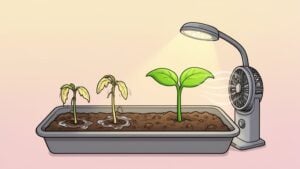
Right after your seeds pop, the plant is super fragile. For the first week or two, it’s not even looking for food from you; it’s still living off the packed lunch of nutrients stored inside the seed itself. Blasting it with fertilizer now is a classic rookie mistake—you’ll burn the poor thing out before it even gets a chance to grow.
At this point, less is more. All you need is plain, pH-balanced water. If you’re growing in a “hot” soil mix that’s already loaded with goodies, you might not need to feed at all for several weeks. The only goal here is to let those tiny roots get established without any stress.
The single biggest mistake new growers make is overfeeding their seedlings. Your plant already has everything it needs. Just be patient and let it build a solid root foundation before you even think about grabbing a bottle of nutrients.
The Explosive Vegetative Stage
Once your plant has a few sets of true leaves and looks like it’s settled in, it’s officially in the vegetative stage. This is its growth spurt period. Its only job is to get as big and bushy as possible, building the strong framework it’ll need to hold up heavy buds later on.
During this phase, Nitrogen (N) is the absolute star of the show. Nitrogen is the main ingredient for chlorophyll and all that lush, green growth. A good veg-stage fertilizer will have a higher first number in its NPK ratio, something like a 10-5-7.
Here’s how to approach feeding in veg:
- Start low and go slow. Always begin with a quarter or half of the recommended dose on the bottle. You can always add more later, but you can’t easily take it away.
- Read your leaves. The plant will tell you how it’s doing. Vibrant, deep green leaves mean you’ve got a happy plant.
- Increase feeding gradually. As your plant gets bigger and stronger, you can slowly ramp up the nutrient strength with each feeding.
This whole stage is about building a monster. A bigger, healthier plant in veg almost always means a bigger, more impressive harvest down the line.
The Crucial Flowering Stage
The moment you switch your lights to a 12/12 schedule (or when your autoflower starts showing its first little white hairs), the plant’s mission changes completely. It slams the brakes on growing tall and pours every bit of energy into making flowers. This hormonal shift totally rewrites its diet.
Suddenly, the plant’s hunger for Nitrogen drops off a cliff, while its craving for Phosphorus (P) and Potassium (K) goes through the roof. This is where finding the best fertilizer for cannabis in its bloom phase is absolutely critical.
- Phosphorus (P) is the energy transfer guy. It fuels the creation of new bud sites and helps pack on density and weight.
- Potassium (K) is the general manager. It handles everything from water and nutrient uptake to producing the aromatic terpenes and potent cannabinoids we’re all looking for.
You’ll see this shift in bloom nutrient ratios, which often look like 5-7-10 or even 0-3-3 for late-stage bloom boosters. Getting this right really pays off—studies have shown that proper nutrient management during the flowering stage can increase final harvest weight by 16-22%.
Nailing this transition is one of the most important skills you can develop as a grower. I usually start swapping over to bloom nutrients about a week after flipping the lights to give the plant time to adjust. This careful timing makes sure you’re giving your plants the exact fuel they need to churn out the dense, frosty buds you’ve been working so hard for.
Organic Goodness vs. Synthetic Speed
When you start looking for the best fertilizer for cannabis, you’ll find yourself at a fork in the road with two main paths: organic and synthetic. Think of it like this: you can slow-roast a meal with whole, natural ingredients, or you can whip up a precisely formulated protein shake. Both give you nutrition, but the philosophy, process, and end result are totally different.
Let’s break down what each choice really means for your garden.
Organic growing is all about playing the long game. You’re not just feeding the plant; you’re creating a thriving, living ecosystem right there in your pot. Instead of force-feeding your plants a liquid meal, you’re laying out a buffet of natural stuff like bat guano, kelp meal, or worm castings for the soil’s microorganisms. These tiny helpers then break it all down, creating a slow-and-steady supply of food for your plants to take up as they need it.
This method builds incredible soil health over time. That’s why many old-school growers will swear that nothing beats the rich flavors and smells—the terpenes—that come from plants grown in living soil. It’s a patient art form, perfect for growers who want to nurture the ground their plants grow in.
The Organic Approach: A Living Soil Ecosystem
Going organic means you’re committing to building a rich soil foundation that actually gets better with each grow. This approach has some serious perks, especially if you’re chasing top-shelf quality and sustainability.
- Slow and Steady: Organic nutrients release gradually, which gives you a huge safety net against overfeeding. It’s much, much harder to “burn” your plants when the soil is in charge of the nutrient delivery.
- Feeds the Soil, Not Just the Plant: You’re building a complex web of microbial life. This improves your soil’s structure, how well it breathes, and its ability to hold water cycle after cycle.
- Can Boost Flavor and Aroma: A lot of people believe that a bustling microbial community helps plants produce a more complex and potent range of terpenes, leading to a much more interesting final product.
But it’s not all easy living. The slow-release nature of organics can make it tough to fix a deficiency quickly. If your plant is showing signs of hunger, you can’t just give it an instant shot of food. This method also isn’t a great fit for most hydroponic systems, which need pure, water-soluble nutrients.
The Synthetic Route: Precision and Speed
On the other side, we have synthetic fertilizers. These are basically highly concentrated, purified mineral salts, made for the plant to absorb immediately. If organics are the crock-pot, synthetics are the high-performance fuel injection system.
There’s no waiting for microbes to do their thing. The moment you mix these nutrients into your water, they’re ready for the roots to drink up. This gives you an incredible level of direct control over what your plant gets and when.
This pinpoint accuracy is exactly why synthetics are king in commercial operations and hydroponics. They deliver fast, predictable growth and let growers push plants to their absolute genetic limits. Spot a deficiency? You can often fix it with the very next watering.
Of course, that speed and control come with a catch. It’s incredibly easy to go overboard and scorch your plants with nutrient burn, since there’s no soil to act as a buffer. You are in the driver’s seat, which means one wrong move can have immediate consequences. Synthetics also do nothing to build soil health for the long term; they are strictly about feeding the plant, right here, right now.
So, what’s the verdict? The choice between organic goodness and synthetic speed really comes down to your philosophy as a grower. Are you looking to cultivate a living soil ecosystem and savor the nuanced results? Or is your goal maximum control, speed, and yield, especially in a soilless setup like hydro? Neither is flat-out “better”—the best fertilizer for cannabis is simply the one that fits your goals and growing style.
Why Your Growing Medium Changes Everything
It’s easy to get hung up on the nutrients in the bottle, but where your plant’s roots live—the growing medium—completely changes the rules of the game. Think of it like cooking: using rich, living soil is like slow-cooking in a heavy cast-iron skillet, while growing in coco or hydro is like flash-frying in a high-tech wok. You can make a great meal either way, but you can’t use the same technique for both.
Choosing the right fertilizer isn’t just about NPK numbers; it’s about matching your feeding plan to your grow setup. A nutrient schedule that creates monsters in soil could easily kill a plant in a hydroponic system.
Growing in Soil: The Forgiving Foundation
For most folks just starting out, good old-fashioned soil is the way to go. High-quality potting soil isn’t just dirt; it’s a living ecosystem humming with beneficial microbes and organic matter. This world inside the pot acts as a natural buffer, holding onto water and nutrients and spoon-feeding them to your plant’s roots as needed.
This buffering capacity is what makes soil so forgiving. If you get a little heavy-handed with the fertilizer, the soil helps shield the roots from getting fried right away. In fact, many “hot” amended soils come pre-loaded with enough food to get your plants through their first few weeks on nothing but plain water.
The tradeoff? You have less direct control. That same buffer that protects your plant can also make it slow to respond if you’re trying to fix a nutrient problem.
Coco Coir and Hydroponics: The Blank Canvas
Soilless mediums like coco coir and full-blown hydro setups are a completely different animal. They are basically inert, meaning they bring zero nutrients to the party. They’re a blank canvas, giving you absolute, pinpoint control over your plant’s diet. But with great power comes great responsibility.
When you grow in coco or hydro, you are the only source of nutrition. There’s no soil buffer to save you if you screw up.
Here’s what that means in practice:
- Precision is Everything: You have to supply a complete nutrient solution, with every single macro and micronutrient, every time you feed.
- Lightning-Fast Response: The good news is you can correct a deficiency almost instantly, often with the very next watering.
- Higher Stakes: The bad news is it’s much easier to cause nutrient burn or lockout because there’s nothing between the roots and your fertilizer.
This level of control is why so many commercial operations and experienced growers swear by soilless methods. To see how it all works, check out this guide on growing with hydroponics, which really gets into the nitty-gritty.
In a soilless medium, you are personally responsible for 100% of your plant’s nutrition. The medium itself provides nothing but physical support for the roots.
The pH Factor: Your Plant’s Gatekeeper
No matter what you’re growing in, none of this matters if your pH is out of whack. So, what is pH? In simple terms, it’s a scale that measures how acidic or alkaline your root zone is. For cannabis, this is a non-negotiable, make-or-break deal.
Think of pH as the bouncer at the door of a nightclub. Even if you’re serving up a five-star fertilizer, the plant can’t “eat” if the pH is wrong. The roots are physically unable to absorb certain nutrients if the environment is too acidic or too alkaline, leading to a frustrating problem called nutrient lockout.
Here’s a quick guide to the target pH ranges:
- Soil: The sweet spot is generally between 6.0 and 7.0. The organic matter in the soil helps buffer the pH, keeping it relatively stable.
- Hydroponics & Coco Coir: You’re working in a much tighter window, usually between 5.5 and 6.5. Since there’s no buffer, you have to check and adjust the pH of your nutrient solution every single time you feed.
A simple digital pH pen is one of the most important tools you can own. It takes all the guesswork out of the equation and makes sure the nutrients you’re paying for are actually available to your plant. Without one, you’re just flying blind.
How to Read the Leaves and Fix Common Problems
Your plants are always talking to you, and their leaves are their language. Learning to understand what they’re saying is what separates the average grower from a great one. Think of yourself as a plant detective—spotting the clues early is the key to fixing problems before they get out of hand.
Most issues you’ll run into are simply a matter of too much or too little of something. It’s almost never a sign of bad seeds; it’s usually a nutrition or environment issue that you can fix. Let’s break down what the most common signals mean and what to do about them.
Decoding Common Leaf Symptoms
When a plant is unhappy, it’s not shy about showing it. The color, shape, and even where a problem shows up on the leaves tell a specific story about what’s going on at the roots. Yellowing at the bottom of the plant, for example, points to a totally different issue than burnt tips at the very top.
Here’s a quick rundown of the usual suspects:
- Yellowing Lower Leaves: This is a classic cry for Nitrogen. If the oldest, lowest leaves start fading to pale green and then yellow, your plant is pulling this mobile nutrient from its old growth to fuel new growth up top. Time to give it a bit more of your veg-stage fertilizer.
- Burnt, Crispy Tips: This one’s easy to spot and a dead giveaway for nutrient burn. The very tips of the leaves will turn brown, dry, and crunchy. It’s a clear signal you’re overfeeding, and it’s time to ease up on the fertilizer.
- Spotted or Blotchy Leaves: Seeing random brown spots, strange blotches, or twisted new growth? Your first suspect should be pH lockout. Even with perfect nutes, the wrong pH can stop your plant from absorbing crucial micronutrients like Calcium or Magnesium, leading to these weird symptoms.
Think of your plant’s leaves as a diagnostic report. The older, lower leaves tell you about mobile nutrient problems (like N, P, K), while the newer, upper growth reveals issues with immobile nutrients (like Cal, Mag, Sulfer) and pH.
Simple Fixes for Common Problems
The good news? Most of these problems are easy to fix if you catch them early. The key is not to panic and make a bunch of crazy changes all at once. Instead, make one adjustment at a time and watch how the plant responds over the next few days. You want to correct the course, not swerve off the road.
If you think something’s wrong, here’s your game plan:
- Check Your pH First: Before you touch your fertilizer, always check the pH of your water and the runoff coming out of your pot. Nine times out of ten, a weird-looking plant is a pH problem, not a real deficiency.
- Fixing Underfeeding: If you’ve confirmed a deficiency, slowly increase the fertilizer dose. Don’t jump from a quarter-strength to a full-strength feed overnight. Gently ramp it up over a week so you don’t shock the plant.
- Fixing Overfeeding: See those burnt tips? The fix is a good flush. Water your plant with plain, pH-balanced water until you get about 20-30% runoff out of the bottom. This washes out the extra nutrient salts. After that, bring back your fertilizer at a much lower dose.
Learning to read the leaves is a skill that makes you a more confident and successful grower. While some issues look similar, knowing the difference between a potassium deficiency in cannabis and something else can easily save your harvest.
To make it even easier, here’s a quick chart to help you figure out what you’re seeing at a glance.
Quick Guide to Leaf Symptoms
This handy chart will help you quickly diagnose common nutrient issues based on what you see on the leaves.
| Symptom | Likely Problem | Simple Solution |
|---|---|---|
| Yellowing starting at the bottom | Nitrogen Deficiency | Increase veg-stage fertilizer slowly. |
| Burnt, brown, crispy leaf tips | Nutrient Burn | Flush with pH’d water, then feed at a lower strength. |
| Brown spots or twisted new growth | pH Lockout / Cal-Mag issue | Check and adjust pH of water and runoff first. |
| Yellowing between green veins | Magnesium Deficiency | Check pH; if correct, add a Cal-Mag supplement. |
Remember, this is just a starting point. Always test your pH before you make any big changes to your feeding routine. With a little practice, reading your plants will become second nature.
Building a Simple and Effective Feeding Schedule
Theory is great, but let’s get down to business. How often should you actually be feeding your plants? The truth is, creating a solid, repeatable feeding schedule is one of the best things you can do for consistent results, and it doesn’t need to be some complicated science experiment.
The single most important piece of advice, especially if you’re trying a new fertilizer or growing from new cannabis seeds, is to start low and go slow. It’s a classic saying for a reason. Always begin with half, or even a quarter, of the dose recommended on the nutrient bottle. This gives you a safe starting point to see how your specific plants react.
The golden rule of feeding is that you can always add more nutrients later, but you can’t easily take them away. It’s far easier to fix an underfed plant than to rescue one from a bad case of nutrient burn.
The Feed-Water-Feed Cycle
One of the most reliable and beginner-friendly methods out there is the “feed-water-feed” cycle. It’s as simple as it sounds: you give your plants a nutrient mix one time, and the next time, you give them plain, pH-balanced water. This simple rhythm is a game-changer for stopping mineral salts from building up in your soil or coco.
That salt buildup is a really common problem, especially with synthetic fertilizers. Over time, it can mess with the pH in your root zone and lock out key nutrients. This leads to all sorts of issues that look like deficiencies but are actually caused by giving too much. Alternating with plain water helps rinse the root zone, keeping it clean and ready to soak up the next meal. For a deeper dive, our guide on when to water weed plants gives you more insight into your plant’s hydration needs.
A Flexible Week-by-Week Framework
Every plant, strain, and grow room is a little different, so think of this as a flexible blueprint, not a rigid set of rules. Your job is to watch your plants and adjust based on what they’re telling you.
Here’s a sample schedule for a typical photoperiod plant grown in soil:
- Weeks 1-2 (Seedling): Stick to plain, pH-balanced water only. A brand new seedling has everything it needs packed right into the cannabis seed.
- Weeks 3-4 (Early Veg): Time to introduce the first light feeding. Start at 25% strength just once a week, using a fertilizer made for vegetative growth (high in nitrogen).
- Weeks 5-8 (Peak Veg): As growth really takes off, you can gradually increase to 50-75% strength. Switch to a feed-water-feed rhythm and look for that vibrant, green color.
- Weeks 9-10 (Transition to Flower): Right after you flip your lights to a 12/12 cycle, start swapping in your bloom nutrients. Begin again at 50% strength to ease the plant into its new diet.
- Weeks 11-15 (Peak Flower): This is when the real fun starts. Slowly work your way up to 75-100% strength with your bloom fertilizer, which should be rich in phosphorus and potassium to help pack on bud weight.
- Final 1-2 Weeks (Flush): For the home stretch, go back to using only plain, pH-balanced water. This helps flush out any leftover salts and is believed by many growers to improve the final taste and smoothness of the smoke.
And don’t forget—always check your pH before you water or feed. This simple schedule, combined with a little bit of careful observation, is all you need to give your plants the consistent food they need to thrive.
Ready to put this knowledge to the test with top-tier genetics? At Growers Choice Seeds, we provide lab-tested, high-quality cannabis seeds backed by a 90% germination guarantee. Find the perfect strain for your setup and start your growing journey with confidence.
FAQs
Do Different Cannabis Seeds Need Different Fertilizers?
In a way, yes. While all cannabis plants need the same basic NPK and micronutrients, their appetites can be wildly different. Some modern hybrids are incredibly hungry and will chug down nutrients, while some old-school landrace strains are much more sensitive and get burnt easily.
Your best bet is to start with a standard feeding recommendation and watch your plants closely. The leaves are your best friend here. Learn to read their signals and be ready to dial the fertilizer strength up or down based on how your specific cannabis seeds are responding. The plants will always tell you what they need if you know how to listen.
Are Extra Bloom Boosters Really Necessary?
That’s the million-dollar question, isn’t it? The simple answer is no, they aren’t essential if you’re already using a high-quality base fertilizer. A solid bloom formula is already designed with the higher levels of Phosphorus (P) and Potassium (K) that your plants need to build big, dense flowers.
Think of bloom boosters as a performance supplement, not the main meal. For a seasoned grower trying to squeeze every last bit of potential out of a plant, they can be a useful tool. But for most folks, they just add complexity and increase the risk of nutrient burn.
If you’re still getting the hang of things, just focus on mastering your base nutrients. A healthy, well-fed plant will give you an incredible harvest without all the extra bottles.
Can I Make My Own Cannabis Fertilizer at Home?
You absolutely can, and it’s not as hard as it sounds. People have been doing this for centuries using things like compost teas, fermented plant juices, or just mixing natural stuff like bat guano and kelp meal into their soil. This is the heart of what organic growing is all about—building a living soil that feeds your plants for you.
When you make your own fertilizer, you know exactly what’s going into your garden. It’s also a great way to save some money and be a little more eco-friendly. Just keep in mind that most DIY fertilizers are slow-release, feeding the soil over time rather than giving the plant an instant kick.