




 21% THCa






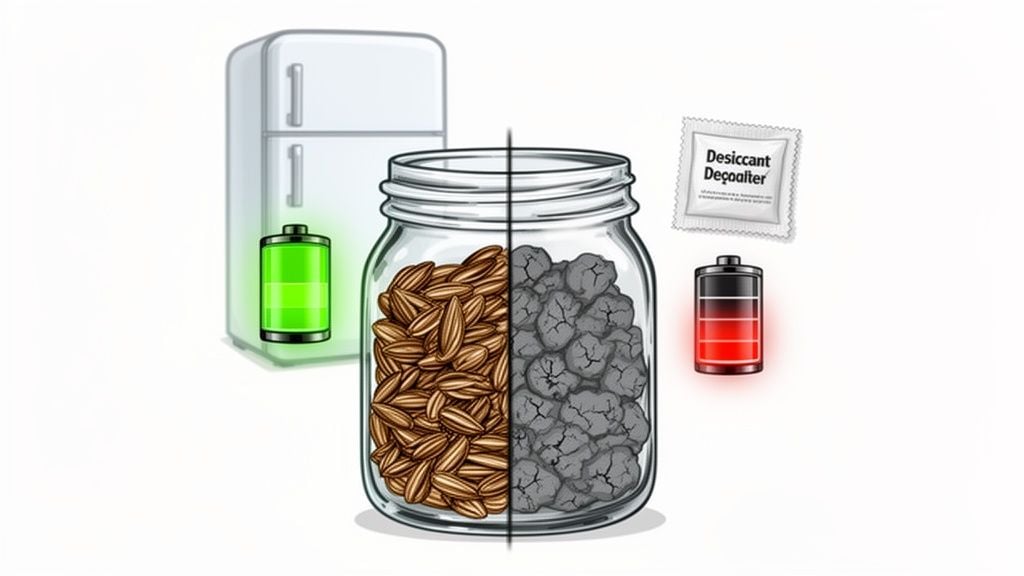
So, do pot seeds go bad? The short answer is yes, but it’s not like milk suddenly expiring on a specific date. A better way to think about it is like a battery that slowly loses its charge over time. Fresh, high-quality seeds are fully charged and ready to pop, but poor storage can drain that energy surprisingly fast.
The Honest Answer About Seed Longevity
When you get a pack of cannabis seeds, you're holding a tiny, self-contained life support system. Tucked inside that tough outer shell is an embryo and a supply of food, both perfectly preserved and just waiting for the right signal to spring to life. This built-in energy reserve is what we call viability.
But that energy doesn’t last forever. If you leave those seeds in a hot car, a damp drawer, or anywhere with wild temperature swings, that "battery" starts to fade. In my experience, the single biggest factor in how long your seeds last is how you store them. Proper storage keeps the seed dormant and locks in its internal energy for the long haul.
It Starts with Strong Genetics
The quality of the seed itself plays a huge role from the get-go. Starting with strong genetics from a trusted source like Growers Choice Seeds means you’re getting a seed with a much better starting "battery life," setting you up for success from day one. A healthy, robust seed simply has more stored energy and is naturally more resilient to the slow march of time.
Think of it this way: a cheap, off-brand battery might work for a little while, but a premium one holds its charge longer and performs more reliably. The same principle applies to your cannabis seeds.
How Long Can Seeds Really Last?
With the right care, the answer is surprisingly long.
When they’re stored properly, cannabis seeds can remain viable for an incredible amount of time. Of course, germination rates will decline over the years, but you might be surprised by the numbers. Refrigerated seeds can hit 70% viability after 15-20 years, while frozen ones can maintain over 50% after three decades. On the flip side, poor storage conditions can kill that viability in just a few years. For some more great insights, you can explore seed longevity at Happy Valley Genetics.
This incredible lifespan makes your seed collection a true investment. By understanding what keeps them fresh, you protect that investment and ensure your favorite genetics are ready to grow whenever you are.
Meet the Three Enemies of Seed Viability
When you're trying to figure out if your pot seeds can go bad, it really helps to know what you're up against. Think of your seeds as tiny, dormant life forms with three sworn enemies: light, moisture, and temperature swings. These are the villains that will drain their vitality and crush your germination rates down the line.
The good news? Beating them is surprisingly simple. It’s not about fancy equipment; it’s about creating a stable, dark, and dry environment where your seeds can basically hibernate until you’re ready for them.
The First Enemy: Light
Light is probably the most obvious culprit. It’s like a false alarm clock, telling a dormant seed that it’s "go time." This signal tricks the seed into kicking off its internal germination process, which starts burning through the finite energy reserves it needs to sprout successfully in soil.
Even a little bit of light exposure can start this energy drain. That’s why keeping seeds in total darkness isn't just a suggestion—it’s a hard and fast rule for preserving their future potential. You want them to stay completely asleep.
The Second Enemy: Moisture
Moisture is the silent killer. A healthy seed is dehydrated for a very good reason: to stay in a state of suspended animation. As soon as you introduce too much humidity, you’re basically inviting disaster.
Excess moisture can lead to two terrible outcomes:
- Mold and Fungi: Just a tiny bit of condensation in a storage container can be a breeding ground for mold, which will rot your precious seeds from the inside out.
- Premature Germination: High humidity can fool a seed into thinking it's been planted. It might crack open and try to sprout right there in the bag, where it has absolutely zero chance of survival.
This is why a controlled environment is so critical. For long-term storage aiming for 10+ years, the sweet spot for relative humidity is between 12-14%. Once humidity gets up into the 40-60% range, the seed's respiration rate skyrockets and fungi begin to thrive. In fact, some seed banks have reported losing up to 50% of their stock in the first year just from improper humidity control. You can discover more insights about seed preservation from Royal Queen Seeds to see how the pros do it.
The goal is to keep your seeds bone-dry until you're ready to plant them. An airtight container with a desiccant pack is your best friend in this fight.
The Third Enemy: Temperature
Last but not least, we have temperature. Wild temperature fluctuations are a death sentence for seeds. Just think about the environment in a garage, a glove box, or a kitchen cabinet near the stove—these are the absolute worst places to keep them.
Every time the temperature goes up and down, the seed’s internal structure expands and contracts. This constant stress wears down the delicate embryo and the food stores it depends on. A consistently cool temperature is what you need to slow the seed's metabolism to a crawl.
By keeping these three enemies—light, moisture, and temperature fluctuations—in check, you can add years to the life of your cannabis seeds. With simple tools you likely already own, like an airtight jar and a spot in the fridge, you can create a safe haven that protects their genetic potential for a long, long time.
How to Test if Your Old Seeds Are Still Good
So, you stumbled upon a forgotten stash of seeds tucked away in a drawer. Before you invest time, soil, and hope into them, it's worth a little detective work to see if they're still in the game. While these quick checks aren't a 100% guarantee, they give you a pretty solid idea of whether your seeds have a fighting chance.
Think of it like checking fruit at the grocery store—a quick look and feel can tell you a lot. Running these simple, hands-on tests can save you a ton of effort and disappointment down the road.
The Squeeze Test
This is probably the most common and straightforward physical check. Just take a seed and gently pinch it between your thumb and forefinger.
- A healthy, viable seed feels hard and solid. It won’t give way under gentle pressure, which tells you its protective shell is strong and ready to do its job.
- A bad seed, however, will feel weak and hollow. If it crumbles, cracks, or crushes with just a little squeeze, that's a clear sign the delicate life inside has dried out and died. That one's a dud.
This is a great first step to immediately weed out the weakest seeds in the batch.
The Float Test
The float test is another old-school method that growers have trusted for ages. It couldn't be simpler: drop your seeds into a glass of room-temperature water and just let them sit for an hour or two.
The idea here is that healthy seeds are denser. They'll absorb some water and sink to the bottom. Seeds that are still floating after a couple of hours are often duds—they might be empty, undeveloped, or too dried out to absorb water and sprout.
It's a solid test, but don't be too quick to toss the floaters. Sometimes a perfectly good seed just has a stubborn air bubble trapped in its shell. Give any floating seeds a gentle tap to see if they'll sink before you write them off.
The Visual Inspection
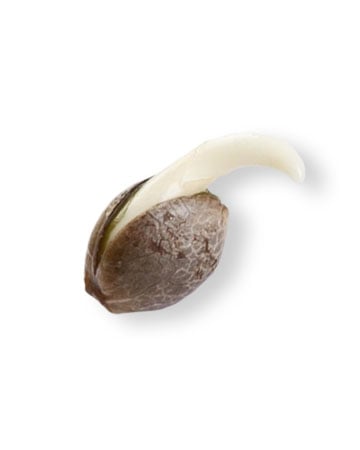
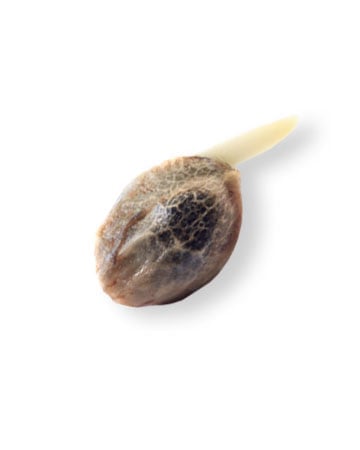
Last but not least, just use your eyes. A healthy cannabis seed has a certain look to it. You want to see rich, dark colors—think deep browns, grays, or even black, often with mottled or "tiger-stripe" patterns. A healthy seed might also have a slightly waxy sheen to its surface.
On the flip side, seeds that are pale green or white are almost always immature. They were likely harvested too early and just don't have the energy stored up to actually sprout. If your old seeds look frail and pale, the odds aren't in their favor. For a deeper dive into what comes next, our cannabis seed germination guide can walk you through the process step-by-step.
A Simple Playbook For Storing Your Seeds
Protecting your seeds is really about protecting your investment. You wouldn't leave cash out in the rain, so don't leave your premium genetics in a hot glovebox. The good news is, proper storage is surprisingly simple, and getting it right means your seeds will be ready to pop whenever you are.
Think of seed storage in two different ways: short-term and long-term. Each has its own playbook, but the core principles of keeping them cool, dark, and dry never change. This is the mantra that answers the question, "do pot seeds go bad?"—because if you get this wrong, they absolutely will.
Short-Term Storage For The Next Grow
If you plan on planting your seeds within the next year or so, you don't need to get too fancy. This is all about finding a stable spot away from the chaos of daily life.
Your goal is simple: find a cool, dark drawer or closet that doesn't see a lot of temperature swings. Pop your seeds in a small, airtight container like a labeled Ziploc bag (with the air pushed out) or a tiny jar. Tossing in a small desiccant pack—like those little silica gel packets you find in new shoe boxes—is a pro move to absorb any stray moisture.
Long-Term Storage For Serious Savers
When you're looking to preserve seeds for several years, the refrigerator becomes your best friend. This method creates a perfectly stable environment that dramatically slows down the seed's aging process, keeping that internal "battery" fully charged for the long haul.
Here's a quick breakdown of the refrigerator method:
- Get an Airtight Container: A small glass jar, an old film canister, or a vacuum-sealed bag works great.
- Add a Drying Agent: Fill about a quarter of the container with dry white rice or silica gel packs. This is your insurance policy against moisture.
- Label Everything: Clearly mark the container with the strain name and the date you stored them. Trust me, you won't remember later.
- Find the Sweet Spot: Place the container in the most stable part of your fridge—usually the back, far away from the door where temperatures fluctuate the most.
To give you an idea of how effective this is, stable, cool temperatures are a game-changer. Properly refrigerated seeds can maintain 70%+ viability after 15-20 years. In fact, the first decade of proper storage can yield germination rates nearly as good as fresh seeds. The key is avoiding locations with daily temperature swings of 20°F or more.
If you want an even deeper dive into the science and strategy, you can learn how long cannabis seeds can be stored in our dedicated guide.
This decision tree gives you a simple way to quickly check if your old seeds might still have some life in them.
As the chart shows, both physical integrity (not being brittle) and density (sinking in water) are strong initial indicators of a viable seed.
To make it even clearer, here’s a quick comparison of the two main storage approaches.
Short-Term vs Long-Term Seed Storage Methods
| Method | Best For | Equipment Needed | Key Tip |
|---|---|---|---|
| Room Temperature | Storing for up to 1 year | Airtight container (bag, jar), desiccant pack (optional), dark drawer/closet | Consistency is key. Avoid places with fluctuating temperatures like a garage or attic. |
| Refrigeration | Storing for 1-10+ years | Airtight container (jar, vacuum bag), desiccant pack/rice, refrigerator | Place the container at the back of the fridge, away from the door, for maximum stability. |
Choosing the right method simply depends on how soon you plan to plant. For a few months, a dark drawer is fine. For a few years, the fridge is your best bet.
Freezer Storage: The Ultimate Preservation
For those looking to archive genetics for decades, the freezer is the final frontier. Frozen seeds can stay viable for an incredibly long time, but there’s one critical catch: thawing them correctly.
When you take seeds directly from the freezer to room temperature, condensation immediately forms on their cold shells. That moisture can seep inside and shock the embryo, killing it instantly.
To avoid this disaster, always let the sealed container come to room temperature for several hours before you open it. This allows the seeds to warm up gradually, preventing any deadly condensation from forming. Following this one rule is the difference between success and a heartbreaking failure in freezer storage.
How to Revive Old and Stubborn Seeds

So, you’ve dug up an old bag of seeds, ran a few tests, and a couple of them look like they might have a flicker of life left. Don’t give up on them just yet. Old seeds are a bit like a hibernating bear—their outer shell gets tougher and less permeable, and their internal energy stores are running on fumes. They often just need a little nudge to wake up.
It’s kind of like trying to start a vintage car that’s been parked in a barn for a decade. You wouldn’t just turn the key and expect the engine to fire up. You’d probably have to charge the battery and prime the fuel lines. These revival methods are the grower’s equivalent, giving those stubborn seeds the boost they need to get going.
Giving Them a Helping Hand
When a seed has been sitting around for years, its outer casing can become incredibly hard. This makes it tough for water to get inside and kickstart the germination process. Luckily, you can step in and lend a hand.
A couple of straightforward but surprisingly effective techniques can massively improve your chances:
- Scarification: This sounds fancy, but it just means roughing up the seed’s shell a bit. Grab a piece of fine-grit sandpaper or the striker on a matchbook and gently scuff the outside of the seed. The goal isn’t to grind it down, but to create tiny scratches that help moisture seep in.
- Pre-Soaking: After scuffing them, drop your seeds into a glass of room-temperature water for 12 to 24 hours. This pre-soak is crucial for softening that tough exterior and rehydrating the embryo inside. Some growers even add a drop or two of hydrogen peroxide to the water to add a little oxygen and kill off any lingering pathogens.
Combining these two steps often delivers the one-two punch needed to awaken even the sleepiest seeds.
Creating the Perfect Wake-Up Call
Once you’ve prepped your seeds, it’s time to give them the perfect environment to sprout. The good old paper towel method works great here, but with one key tweak for old seeds: consistent, gentle warmth.
The idea is to maintain a stable temperature that encourages the seed to focus its limited energy on sprouting, not just surviving. A spot that’s slightly warm to the touch—like the top of a seedling heat mat or even a cable box—provides that perfect, gentle heat to coax them back to life.
This extra effort won’t guarantee every single old seed will pop, but it gives those precious, aged genetics the best possible shot. It’s a great reminder that just because pot seeds go bad over time doesn’t mean they’re a lost cause. With a little patience, you might just be able to bring them back from the brink.
Why Starting with Quality Genetics Matters
You can follow every storage best practice in the book, but all those techniques are designed to do one thing: protect the potential that’s already locked inside the seed.
If you begin with weak, unhealthy genetics, you’re fighting an uphill battle from day one. It’s like trying to keep a dying battery from losing its last bit of juice. This is why experienced growers know that starting with healthy, robust genetics is truly half the work.
When you source your seeds from a reputable bank, you’re getting more than just a seed; you’re getting a product that has been professionally cared for from the moment it was harvested. At Growers Choice Seeds, for instance, we hand-inspect every single seed to make sure you’re receiving a clean, viable product right out of the gate. That initial quality control gives you a massive head start.
Think of it this way: protecting that potential with the storage methods we’ve discussed means you’re safeguarding a future successful harvest, not just a handful of old seeds.
Ultimately, a seed bank that stands behind its product isn’t just selling you seeds; they’re providing a promise of genetic potential. A high germination guarantee is a clear sign of their confidence in the quality and viability of their stock.
To see what this looks like in practice, you can learn more about the Growers Choice germination guarantee and understand why it’s so important. Starting strong simply makes every other step, including long-term storage, that much more effective.
Ready to skip the guesswork and start with genetics guaranteed to be fresh and viable? Growers Choice Seeds offers a huge selection of premium, hand-inspected seeds, all backed by our 90% germination guarantee. Explore our collection and kick off your next grow with total peace of mind.
FAQs
Do Autoflower Seeds Last as Long as Feminized or Regular Seeds?
Yep, they sure do. Whether a seed is an autoflower, feminized, or a regular old-school bean has zero effect on how long it can stay viable. A seed’s shelf life boils down to just two things: the quality of its initial genetics and how well you store it.
All seeds—no exceptions—thrive in the same conditions: cool, dark, and dry. An autoflower seed stored properly in the back of your fridge will easily outlast a top-shelf feminized seed that’s been sitting in a hot, humid shed. It all comes down to the environment you create for them.
The number one mistake growers make is stashing seeds in a place with fluctuating conditions, like a kitchen junk drawer or the glove compartment of a car. Those wild swings in temperature and humidity are the fastest way to kill your seeds.
And the second biggest mistake? Forgetting to label your containers. Trust me, “mystery seed” grows are a lot less fun than they sound. Always label with the strain and date.
Can I Just Keep Seeds in Their Original Breeder Pack?
If you plan on planting them within a few weeks, you’re probably fine. But for anything longer than that, you’re rolling the dice. Those original packs are great for shipping, but they’re rarely built for long-term, airtight, and moisture-proof storage.
The smart move is to transfer your seeds to a dedicated, airtight container. Think small glass jars or those thick, resealable Mylar bags. Tossing a small desiccant pack in there is a pro-level touch that goes a long way in keeping the environment perfectly dry.